Maison Dieu Re-awakening.

30 August, 2025 – 8:23 pm

Over the last three years, I have been working with the Maison Dieu re-awakening programme, you will have seen my posts from all the wonderful days that I have spent with them, whether demonstrating and running have a go sessions or carving my beastie for the handling objects.

https://www.maisondieudover.org.uk/

Creative Careers Café at Dover College.

Activities at Dover Castle in conjunction with the Maison Dieu and Christ Church University College in Canterbury, for SEND, an organisation for youngsters with special needs. I don’t have any photos of the children carving but I had a lovely set up in one of the historic buildings at next to the Keep at Dover Castle. Photos courtesy of Nastia Photography.

It was very exciting driving up into the Castle Keep area.

I also ran activities for the Heritage weekend last September at the Biggin Hall in Dover, in conjunction with the Maison Dieu and Future Foundry. Members of the public were invited to come and try their hand at stone carving with me, watch and meet the conservation teams involved with the restoration of the Maison Dieu.

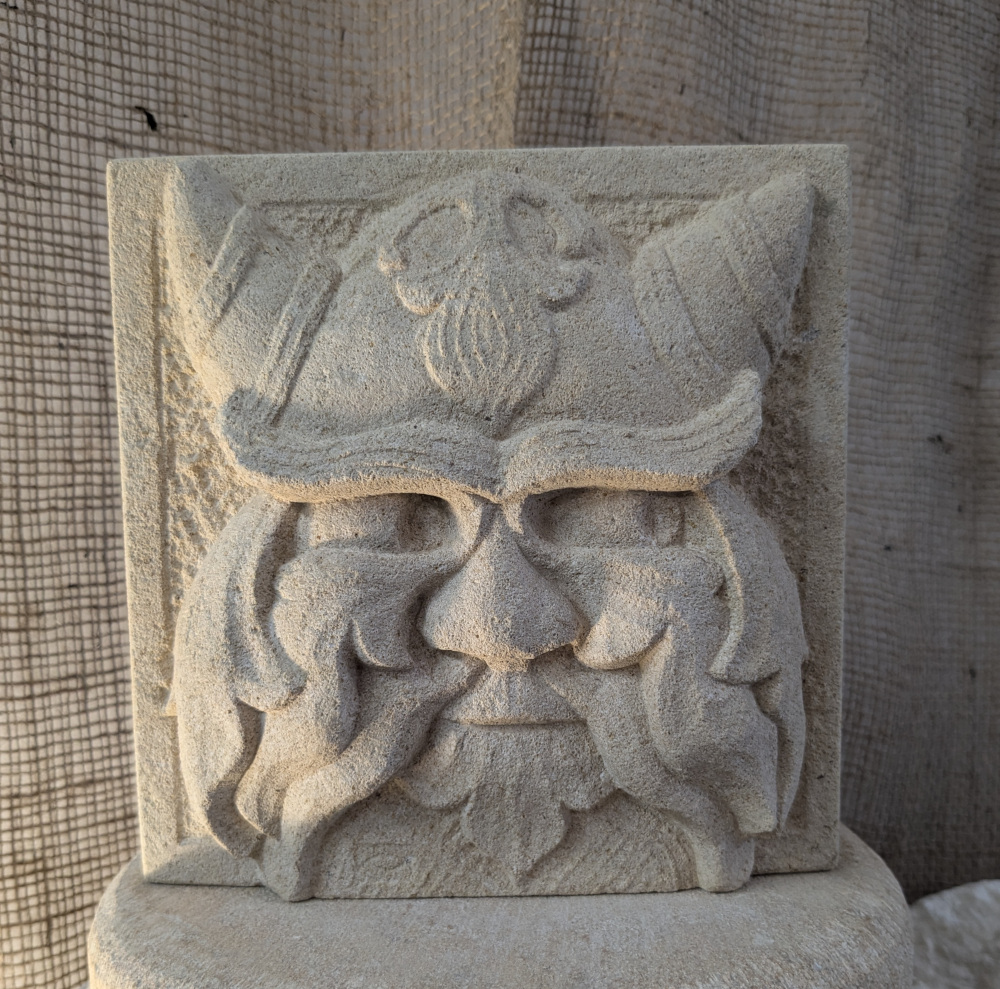
This is my most recent commission from the Maison Dieu and I had to wait to show off the photo of my as it was a gift.

At the opening weekend on the 10th and 11th of May, I spent Saturday sitting outside in the sunshine. I was given a piece of stone from the original fabric of the building. (I could only do one of the days as I was still recovering from my broken ankle at this point).

I had cleaned and sanded the stone and then drew out the design on the stone in my workshop. I wanted to make sure that it fitted beautifully in the shape of the stone.
The Wyvern and the letter type is from the original William Burges designs, this font can be found around the walls of the stone hall and the Wyvern is found on the painted walls of the Mayors Parlour.
It is used as the logo for the Maison Dieu.

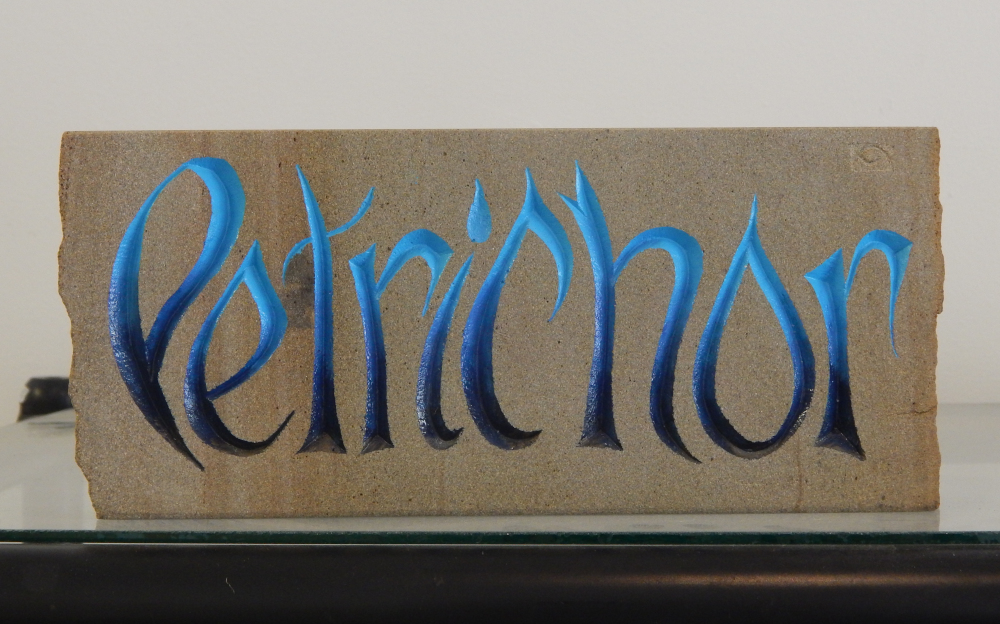
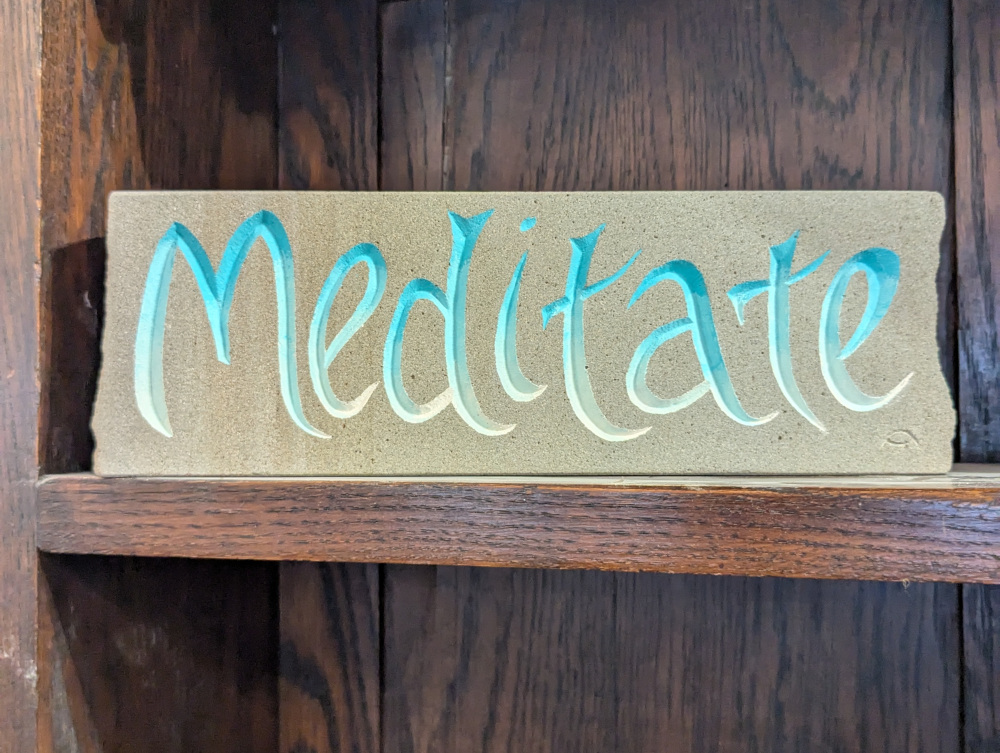
The carvings that I created were finally used for the purpose that they were commissioned for.

Above photos and the one of me carving, courtesy of Nastia photography and Martin Crowther.

It’s so exciting to know that my carvings will be inspiring and delighting young and old for generations to come.

I was within an hour of finishing and so I completed the carving in my studio.

I look forward to the continuing collaboration with the Maison Dieu, the next big thing is a stonemasons festival in May 2026, we’ve already sorted out some blocks of stone for the carvers to choose from.

I will be designing and carving something inspired by the grotesques of this wonderful building which will be raffled to go towards the upkeep of this magnificent building.

Share

A delicate Finial.

25 August, 2025 – 9:00 am

I was really excited when a colleague approached me to ask if I could carve a replacement finial for a church he is working on in Rugby.

St Peter’s Church, Grandborough UK

He brought me the delicate carving of an existing one to work from, only 6 inches tall and less that 4 inches square, with a fair amount of detail missing.

I was able to source some Caen stone from the Canterbury Cathedral works-yard. Dense and hard, yet lovely to chisel, saw and sand.

I took some measurements and marked the profile of the base onto the stone.

I used the profile gauge to create a template for the base, the original carving was out of square so I replicated the new one with this in mind.

As there was only one to carve, and there wasn’t a lot of time, I didn’t make a technical drawing, (given more time, I would have done this first). I transferred the measurements directly from the original one and used my knowledge to fill in the missing pieces.

Once I had carved the base, I used this as my datum point so that I could make a template of the shape of the main body of the finial.

Carving the Cyma Reversa.

I carved the basic features and then drew on the mitre line to create the corners.

The crocketts are organic shapes based on the Acanthus flowers and leaves, this is what gives the finial it’s shape and is used extensively in architecture.

Once I had the basic shape blocked out, I drew on the details of the leaves, making sure that the centre line and the mitre lines remained in place. I used small rifflers to get down to the stone behind the middle of the leaves, so I didn’t damage the base, I put my thumb in the way to protect it.

I moved it from it’s cradle and soft bedding to a basket of sand in order to protect the edges as I got closer to carving the finer details.

Once I was sure I was happy with the carving, I tidied up the edges and added my stonemasons mark.

I had to create the tops of the acanthus leaves using my knowledge of this architectural feature, as you can see from the original, I didn’t have anything physical to work from. The back of the original remained uncarved and it wasn’t even square, so this challenged my knowledge and experience of historical architectural features. I put my stonemason’s mark at the back of the carving, it should be there for many years to come.

I look forward to seeing photos of my carving in situ, the restoration of this Church is being carried out by Adderley Stonemasons, check out their website for more information.

https://www.adderleymasonry.co.uk/

Share

Commissions update.

21 August, 2025 – 8:45 am

What a busy year so far, between the compass rose, Aloy and some letter cutting, I have also managed a visit to 11 Downing Street and met the King.

This commissions was snuck in between my other work as a colleague needed helping out.

The stone was the biggest challenge, but thankfully I was able to purchase some form the Canterbury Cathedral works-yard. They cut it to my specifications and I completed the job over a week.

Bath stone is a pig to carve, coarse, with fossils running through it, I use tungsten carbide tipped chisels to cut through these fossils. Although the stone is soft enough to use cold steel chisels, the calcite that makes up the pieces of fossils would damage the blade.

Once I had made a durable plastic template from the cardboard one that I was provided with, I set out the stone.

It needed squaring up to ensure that the lines were true from the top bed to the bottom bed.

I chiselled away a safety draft before pitching off the stone at either end, I then used my Tungsten carbide tipped saw to cut some ‘cheese cuts’ along the length. This helps me to waste away the stone to get to the finished curve of the mullion. A Mullion is the stones that go from cill to transom (across the window, part of the way up) or lintel (along the top of the window) separating the glass in a stone window.

It is located at a property in Wimborne in Dorset.

Thankfully, I was able to produce these architectural features and my colleague’s customer was very happy with the work.

My colleague sent me these pictures of where it was destined for and the finished repair.

This next commission was a memorial for a former Master of the Worshipful Company of Masons.

https://www.masonslivery.org/

I was very honoured to have been recommended for this carving.

As you can see, the first job was to carve the top into a curve. I then drew out the lettering to my customer’s specifications and set about carving the inscription.

The cap badge is the Royal Welch Fusiliers, my customer provided me with an image to work from, I scaled it to be the right size for the memorial. This was challenging to carve due to the fine detail and lettering, I brought out my trusty 1mm tungsten carbide tipped chisel for the fine detail.

This will be placed in the cemetery at Richmond.

Refurbishment of the plaque for Lieutenant Colonel Newman, a recipient of the Victoria Cross for his role in the attack on St Nazaire.

I was approached by a member of the local Royal British Legion to ask if I could repair and refurbish a memorial to a recipient of the Victoria cross.

The original plaque is made out of some type of resin, it was stuck to another plaque and was bowing and laminating apart. I didn’t want to force the two apart. I stuck them back together using epoxy resin, I mixed some slate dust with this to match the colour of the plaque. As the gaps were large, I put several applications on, the last one smoothing off the edges, before I sanded them and made them look seamless.

It had been attached to a low granite base with what appeared to be double sided tape, so in order for this to adhere to the new base, I cleaned off this adhesive.

I had a suitable piece of Portland stone that I had previously carved a large chamfer on. This was a job that I had done before covid, my customer no-longer wanted the piece of stone and told me that I could keep it and use it for something else. I am glad that it has found a use, this obviously helped to keep the cost of the project down as I didn’t need to charge for the stone or the work to carve the chamfer. I drilled holes in this surface and the back of the plaque to receive stainless steel threaded bar and more holes to act as a key for the glue.

The heavy Portland limestone base was attached to the granite base using epoxy resin and stainless steel threaded bar. I wanted to use this piece of stone to raise the plaque off the ground and make it more visible to the passing public.

Thankfully I had help to install this new base as it was very heavy, not likely to go anywhere for the foreseeable future.

I was honoured to be invited to the re-dedication ceremony and hear about Lieutenant Colonel Newman’s time as a POW during WWII.

I have advised that some earth be put across the existing concrete slab base to cover it up and level the ground, the ground rises either side of the memorial and this would make it look better with some plants and bulbs for Spring. The granite slab that the plaque was originally attached to couldn’t be removed easily and wasn’t high enough to easily read this remarkable story.

Share

Downing Street Visit.

15 August, 2025 – 9:00 am

As a finalist of the Small Awards, I was pleased to be invited to a reception at No. 11 Downing Street.

I decided to take this opportunity to visit some of the galleries before the late afternoon appointment.

Although I stopped briefly at the Tate Britain, I wanted to see these beautiful charcoal drawings in the National Gallery. I spent two hours drawing in here.

On my way down to Downing Street, I didn’t have time to stop and draw this magnificent character on one of the buildings. We had to wait for half an hour before we could enter, obviously I had to take a photo outside No. 10 and Larry the cat had the right idea, chilling out under one of the cars.

We weren’t allowed to take any photos inside No. 11, but I did some sketching.

It was very hot inside, thankfully I had brought my fan, here are some of the official photos.

I shook Rachel Reeves hand and invited her and her family to Sandwich to come and have a go at stone carving.

She had said in the introduction that she had decorated the room with Women artists work, so I said if she needs any more, I am an artist too and that I take commissions.

I will be entering the Duke of Gloucester’s Gold award for stonemasonry excellence next, this is organised by the Worshipful Company of Masons…fingers crossed.

Share

Founders Hall Job.

8 August, 2025 – 7:25 pm

I love my visits to London, especially given one of my jobs is to carve the name of the retiring master of the Founders Hall. https://www.foundersco.org.uk/

This year I am 4 months late due to recovering from my broken ankle.

I travelled up to London on the train and got off at Mansion House to make the short walk to St Bartholomews and 1 Cloth Fair, where Founders Hall now resides.

I got a bit lost, but found my way via Goldsmiths Hall, there was the most amazing Lion and swag carving above the door.

Upon my arrival, I set to work drawing the name onto the limestone plaque, the names are getting closer to the floor, making it trickier each year.

I measure from the previous names, these lower ones have got gradually larger to allow for perspective when the viewer is standing up. Once I have roughly worked out the spacing, I draw the lines in harder using my square.

Next I get up and go downstairs to the hall to draw out the name on the gilded plaque, this gives me an opportunity to stretch, but more importantly, I can get the first coat of paint on the name.

Next up it’s back up to the reception area to make a start on the carving. I sit crossed legged and then as I am working swap my folded legs over so as not to seize up.

In this instance, I redrew the HUGHES as I wasn’t happy with the spacing. Because of the shapes and rules around the letter sizes, it’s important to get the spacing right. These letters are only 14mm tall and I can only look straight at the letters if I lie down on the floor.

Halfway through carving the name, I went back downstairs to apply the second coat of paint on the gilded plaque.

Thank you to the Eloise, Clerks assistant for taking these lovely photos of me.

That’s it until next March.

I love the fact that I am part of the history of the City of London, not only because I am a Yeoman Mason of the historic Livery of Masons, but also that I work for one of the oldest livery companies, The Founders.

Share